


Having SEO-optimized content should be the key part of your SEO strategy. It helps to rank your content higher in the search engines. That’s why it is essential to make sure that your structure and writing of the content on your website has the relevant keywords. In short, keyword strategy, site structure and copywriting encompass SEO.
Search engines like Google determine where your website should be ranked based on a series of factors. Apart from some backlinking strategies that worked well in 2020, there’s more to ranking your website now for 2021. This includes everything: from having an amazing design, great user interface, and the technical SEO stuff. But most importantly… you need to have quality content.
All About Content
Google Algorithm December 2020 Update
Before we get started, let me just inform you that Google has dropped a broad core algorithm update- December core update 2020, designed to show relevant and authoritative content to its audience. It’s called a “core” update because it’s a pretty big change and it impacts a lot of websites!
Historically, SEO and site owners have always assumed the worst when it comes to these updates. But let’s not jump to any conclusions!
As marketers, it will take some time to understand the full impact of all the changes! But here’s what can be inferred:
- No more keyword stuffing! Short, poor quality content that doesn’t cover the topic extensively (despite having good backlinks!) will be penalized.
- Create authority content that’s in-depth, meaningful, and informative! The key is in writing high-quality content with extensive industry knowledge.
- While backlinking is still essential to the algorithm, Google will now be able to evaluate if the quality of content supports backlinks.
It’s time to assess if your digital marketing team is actually producing high-quality content that provides value. Here’s how to evaluate your content.
Google also implies E.A.T (the acronym stands for Expertise, Authoritativeness, and Trustworthiness.) is a very important ranking factor. Let’s discuss this in detail!
Expertise:
Expertise is defined by the Cambridge Dictionary as a “high level of skill or knowledge.” If you offer your services in a relevant field that you have experience in, you’d be classified as an Expert. In comparison to your competitors, the depth and strength of the insight you offer will determine your expertise.
Google judges the websites in a similar manner:
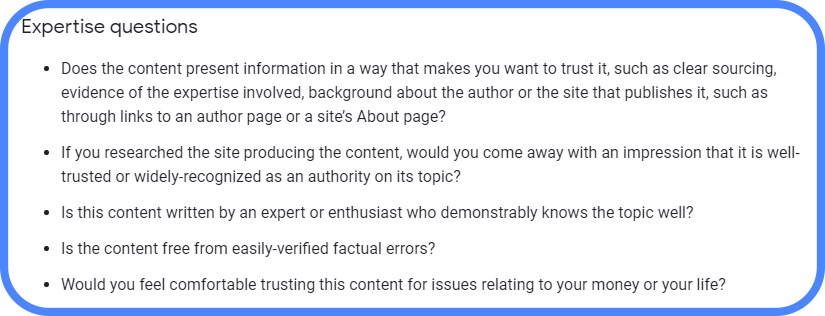
People come to your website to find answers to their questions. In other words, if you provide inaccurate, unhelpful, or outdated content on your website, you’re pretty much done for!
So make sure you conduct thorough research and fact-check your content!
Authoritativeness:
Google scrutinizes your website to ensure that you not only are a reliable source but are the best authority in the field.
What people say about your brand matters. Good reviews matter. (Google’s assessment of quality may also take this into consideration!)
Brand authority can also be established with reviews. Get mentions on Wikipedia or an authoritative site.
Here’s the deal. E-A-T can be applied to brands, authors, businesses, and websites!
Would you want to read an article by someone who has no knowledge or no authority in the field? Would you even trust it? No.
P.S That also means the author E-A-T is too essential to ignore. Google also wants to show articles that are written by people who are experts and have authority in their fields. It can recognize links, citations, mentions, reviews, shares, etc. so it’s best to develop your online portfolio! Your authority is kind of like your online reputation. Brand and author recognition is the key if you want to rank higher.
It’s vitally important for authors to have a well-thought-out and thorough bio that explains why they’re the leading authority in their fields.
Trustworthiness:
Trust is about legitimacy, transparency, and accuracy of your content and website.
Ask yourself:
- Is your content consistent and trustworthy?
- Will your audience be able to trust the information presented?
You have to put in a lot of hard work to get people and the search engines to trust you. One way of achieving this is by highlighting the credentials of the content creators on your website. This is also particularly important to YMYL queries!
Why Relevant Keywords Matter
Among other things, content is what Google looks at when it’s ranking your page. When it reads your page, all the words are relevant. If you have only used “content curation” twice in your blog, then Google will have no idea what’s more important. Think of it this way: the words that you use are clues. Use relevant keywords more often.
But does that mean you stuff in all the keywords and hope you’d rank?
Unfortunately, that’s not how it works. This is also called the SEO lite approach. A text with a lot of the same words in it isn’t an enjoyable read. Just like users, Google finds it unpleasant too. Fortunately, with the new algorithm, trying to rank with keyword stuffing has become obsolete.
True relevance goes beyond repeating the keywords a couple of times. It’s more than that. Let me give you an example.
If you write an article about the “best content curation platform”, make sure you use all the relevant keywords such as content curation, trending articles, digital marketing, content marketing, social media strategies, tips and tricks, content workflow. That’s true relevance!
The rule of thumb is that if your keyword is 1% of all the words, then it’s good enough! Do not make the mistake of positioning all the words in the first paragraph. Spread them out evenly, using a couple in the headings, subheadings, meta-description, first paragraph, and the title of your page! If you’re looking for a tool to help optimize your blog, use ContentStudio to hit the ground running!
Keyword Research
Now that we have established the significance of keywords, let’s discuss how to gather them. Keyword research has four steps. Note down the mission of your business, list all the keywords you want to rank for, look at search intent, and create landing pages.
Analyze the most-searched terms that relate to your business, and the terms that you want to be known for. This outline can be used for writing material.
Incorporating SEO Into your Writing
Get inside the head of your audience!
What is your audience searching for? Include the keywords that result in the highest searches. The keywords that are popular. If you use the relevant keywords more often, it will be highlighted for Google’s algorithm, and ultimately, help you rank higher!
On the other hand, using the wrong keywords will get your business nowhere. Your potential audience won’t be able to find you. This can result in attracting the wrong audience, or none at all! Writing great content incorporating the relevant keywords.
Imagine a person searches for “social media marketing tips” on Google. They click on the first ranked article, scroll down only to find out the content doesn’t match up to what they want. They leave the page in less than 10 seconds. Despite having the relevant title, description, and URL that helped it rank the first page, the page didn’t meet the needs of the searcher. It ended up being a waste of hundreds of backlinks and technical optimization.
This is why good content is so important. Relevant content is the top SEO element you can make the biggest difference in.
Tip: Research your competitors in ahrefs. Find their best-performing articles and look at their search volume. Stay away from trendy topics. If the keyword has enough search potential, find its related keywords as you write a blog post. After in-depth SEO and competitive analysis, your content will fare better!
You can even search Content Insights to evaluate important relevant data to see what’s working well for any topic that you have selected, domain, industry, or competitor.
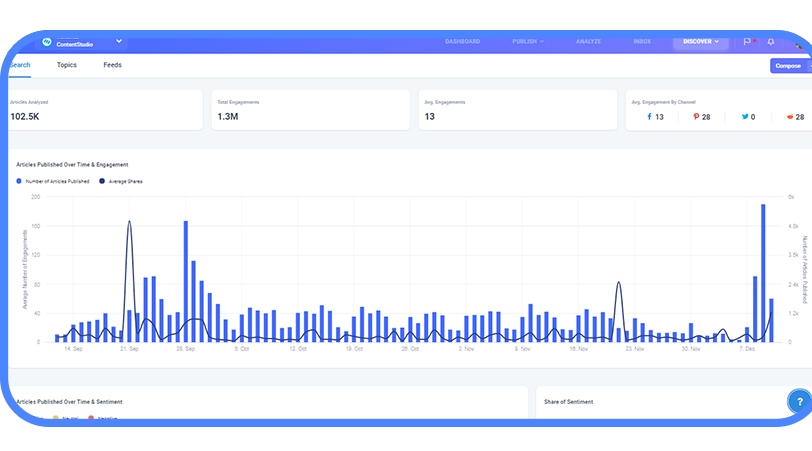
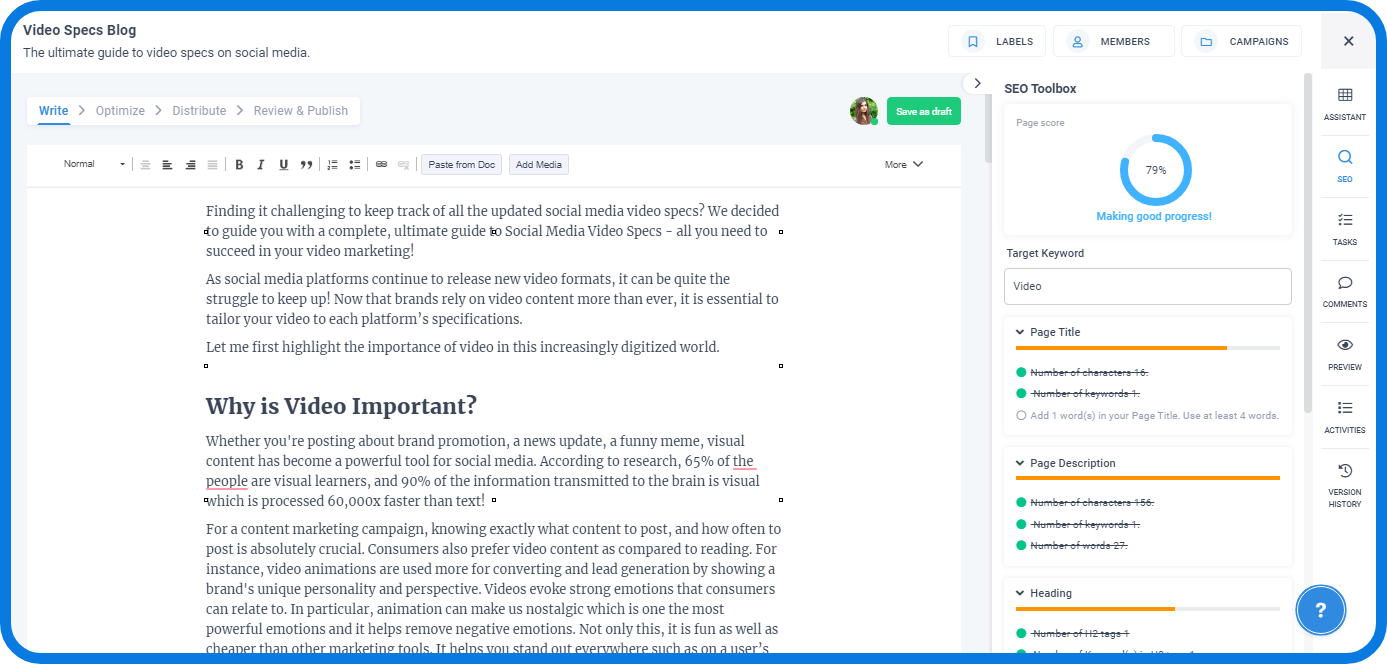
It is recommended to use the target keyword in your title, meta-description, and alt-text of your visually-appealing images. Add headings to differentiate between sections. ContentStudio’s Blog Post Composer helps you with key strategies you need to keep in mind while writing content:
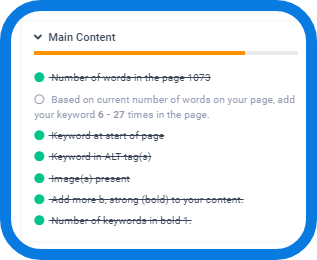
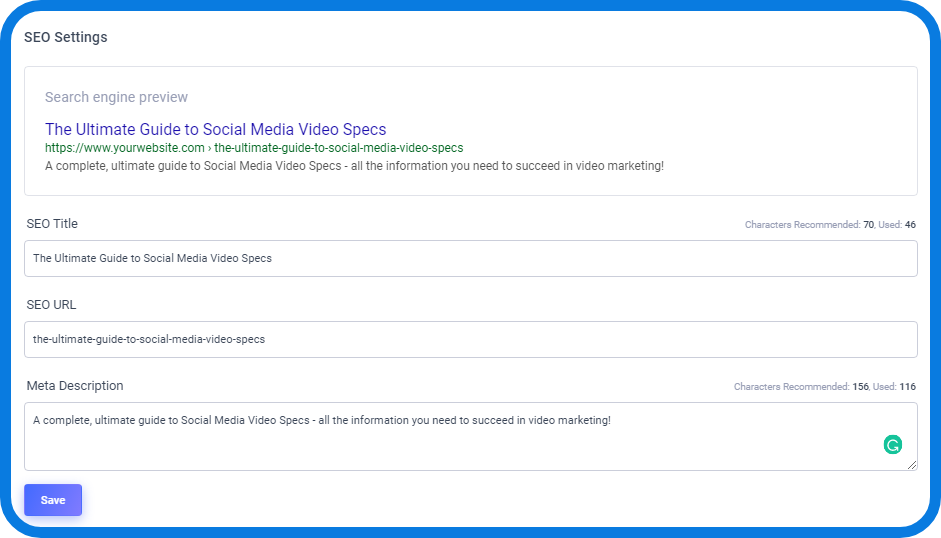
Title and Meta-Description While writing your blog post, it is essential to come up with the best page title and meta description. Remember to make them unique, use relevant keywords with the optimal length.
SEO Title is the optimized title of your blog. Make sure to include your target keyword. People click on the title that speaks up to them, and what they’re searching for. If a person searches for the best social media management tools, your title should look like “X Best social media management tools for you in 2020”
SEO URL is the web address of your blog.
Meta-description is an HTML tag. Its purpose is to generate click-throughs from search engines. While search engines don’t consider this in their ranking algorithm, Google uses CTR as a way of working out whether you’re a good result. Based on this, you will move up in the rankings. Its main purpose is to inform and entice. Keep it short, up to 155 characters. Add a CTA!
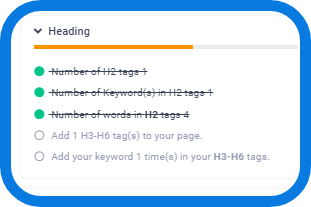
Headings help users and search engines to help understand what part of the content is most important. While uploading a blog, you can keep this checklist in mind: (or let us do it for you in ContentStudio!)
Feature Images
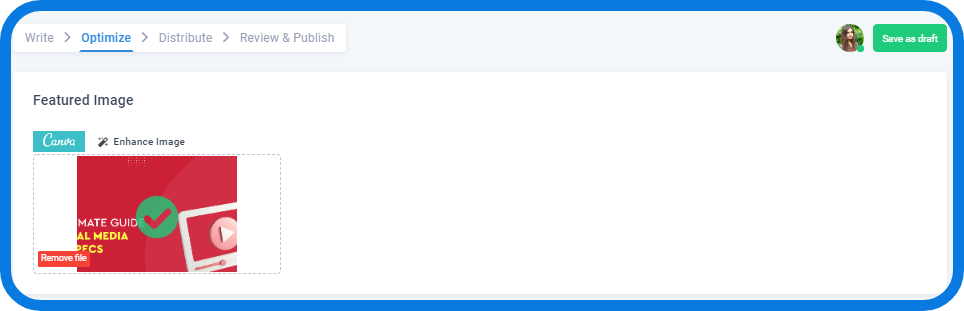
Feature images are meant to engage readers on your website. They can improve brand recognition and boost direct traffic to your blog. While designing a featured image, remember to use appealing graphics and exciting colours.
With in-built integration of Canva, you can design feature images of blogs right from ContentStudio! This streamlines the gap between content design, creation, and scheduling!
Backlinking
Backlinks are kind of like a vote. Every website that links yours back adds to build your credibility. The more backlinks that you have, the higher the trust authority. What’s more, if a website that has high ranking links back to your site – even better.
However, it’s not all fool-proof. Google algorithm is smart enough to find out if your content is good enough or if it’s just a back-link scam. In conclusion, if you have relevant content followed by technical SEO, then you’re headed in the right direction.
Publish and Distribute!
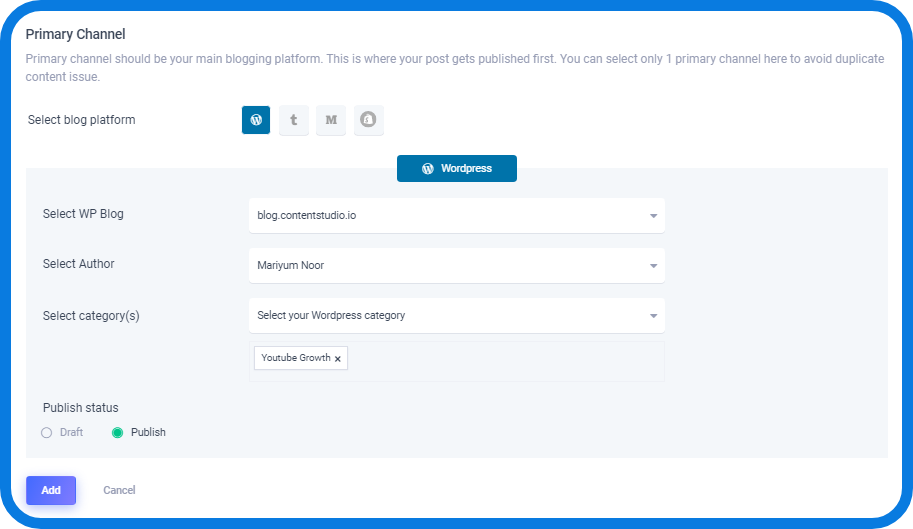
Creating and publishing good content can only take you so far. Distributing it is what makes sure that your content is seen by the world. To keep an eye on how your content is performing, you can use a ranking tool such as SEMrush, Moz, and Rank Tracker. Recently, content distribution has become increasingly important because of the rapid influx of content produced.
For each passing minute, consider these statistics:
- 46,740 posts get published on Instagram
- 456,000 tweets are sent
- 3,607,080 Google searches
While these stats are pretty huge, they point to one thing: A LOT of content is being produced every day and you need to make sure you stand out!
Over 2.7 million blog posts are published on WordPress.
Everyday.
The competition to make your content stand out is fierce!
If you’re a B2B marketer, these numbers prove that it’s going to be even more challenging for you. You need to make sure of one thing: cut through the noise and grab their attention. This means consistently producing content and distributing it effectively!
But how do you come up with a great content distribution strategy?
Let me get into it!
We know that marketing strategy is unique for each business, and it’s also different for each type of content you produce. These different types can be blog posts, webinars, case studies, and formats can include video, audio, long-form text.
Let’s consider an example: you just published a blog post. Where do you think you can distribute it?
Here are a few ideas:
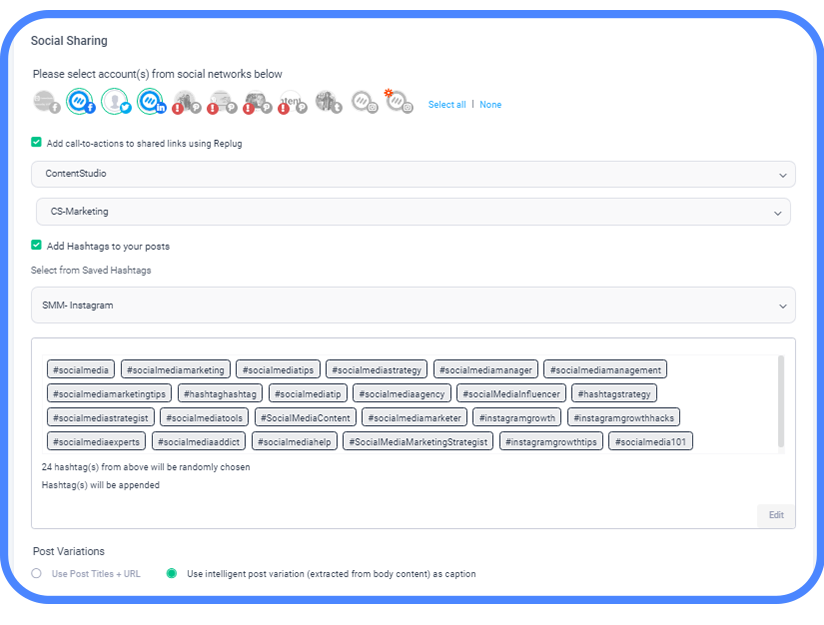
- Promoting on social media and website at the publishing time with CTA branded links for retargeting e.g.

- Include your blog link in Social Media bio descriptions.
- Email marketing and newsletters to launch your new blog posts.
- Produce a video relevant to your blogpost on YouTube.
- Pull out the best bits to create carousel images on Instagram and infographics for social media.
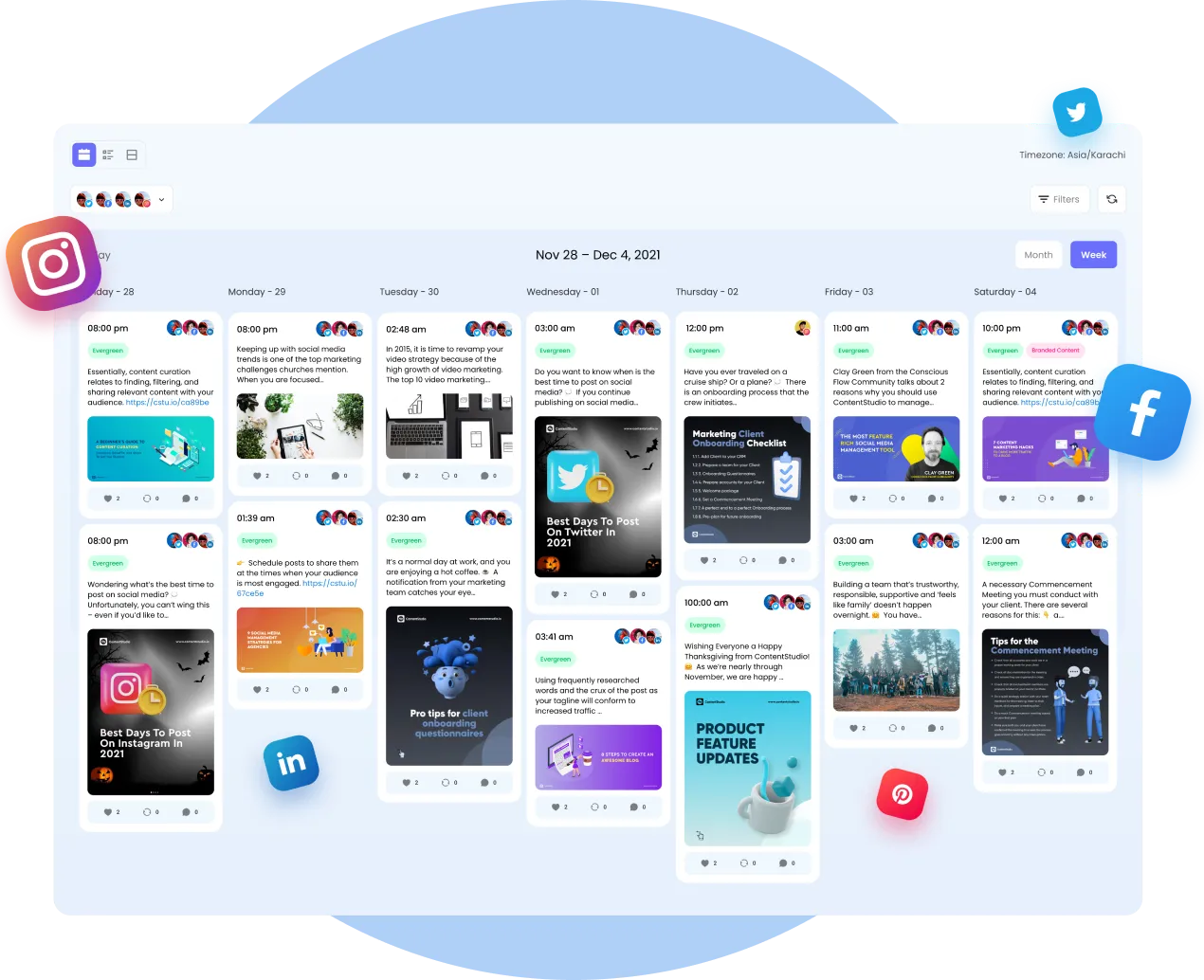
- Plan an Evergreen Campaign to increase overall reach and views and to re-share your older, successful content to the audience again and again so that nobody misses it.
- Help employees promote your blog. Share your content with your team’s network for higher and more personal engagement!
- Participate in Twitter Chats to share your favourite blogs!
- Promote at the best possible time.
Step-by-step process:
- Decide a target keyword for your brand after research.
- Competitive analysis for relevant terms to include into the draft.
- Conduct solid research for the subject at hand.
- Write the first draft.
- Add your draft into ContentStudio’s Blog Composer.
- Tweak your content to the improvements offered by ContentStudio. Make sure you’ve covered all the relevant subtopics and added the optimized keywords.
- Make sure they are no grammatical mistakes! We suggest using Grammarly.
- Finalize your blog with title, URL and meta description.
- Add the social media platforms you want to share your blog too.
- Publish away!
- Add your blog to Evergreen Campaign so it auto-publishes every month!
- Consider other distribution suggestions I mentioned!
Don’t forget to read different case studies to learn from experts.
Check out this SEO case study for tips that work.
In conclusion, SEO is forever about publishing relevant, high-quality content that users value and search for. The process starts from including SEO into your content-writing process and keeping consistency. Publish your blogs directly to Medium, WordPress, Tumblr, and Shopify, and side by side, secondary share to social media networks with ContentStudio’s latest feature. Sign up for a 14-day trial here!

Mariyum Noor
Mariyum Noor is a content marketer who is passionate about learning new things! She writes research-based blog posts for SaaS platforms that are seeking better ways to delight and engage their readers.